Tabletop games often treat an optic as a simple equipment upgrade. For an actual revolver owner, the mount can determine whether that upgrade is practical, affordable, or even compatible. A reasonably priced red dot becomes a poor-value purchase if attaching it requires unexpected gunsmithing or another adapter.
This guide is for revolver owners adding scopes or red dots for hunting, target shooting, or competition, especially those seeking model-specific mounts and no-drill options where available. The recommendations focus on three specialist providers: Weigand Machine & Design, Evolution Gun Works, and Allchin Gun Parts.
- Understand the Terms Before Comparing Prices
- How These Recommendations Were Evaluated
- 1. Weigand Machine & Design — Best Overall for This Use Case
- 2. Evolution Gun Works — Best Value Route for a Compatible Ruger Red Dot
- 3. Allchin Gun Parts — Best Focused Option for a Compatible Smith & Wesson Competition Setup
- Comparison: Where Each Option Offers Value
- How to Choose Without Overspending
Understand the Terms Before Comparing Prices
A scope generally provides magnification; a red dot supplies an illuminated aiming point, usually without magnification. They do not necessarily use the same mounting hardware.
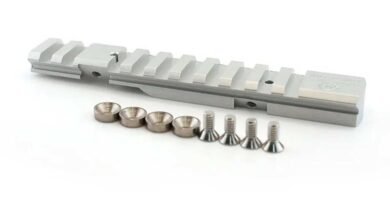
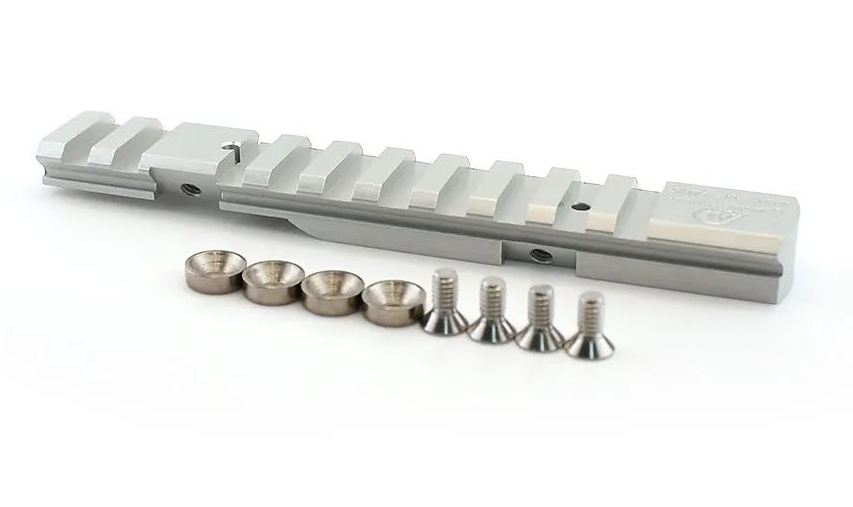
- Base or rail: The interface attached to the firearm. A rail-style base can support compatible scope rings or a rail-mounted red dot.
- Rings: Hardware that holds a tubular scope. Ring diameter must match the scope tube, and the mounting interface must match the base.
- Direct optic mount: A mount designed around a particular red-dot footprint, potentially eliminating a separate rail adapter.
- No-drill mount: A design using existing attachment points or replacing existing components rather than requiring new holes. It does not necessarily preserve the original iron sights.
For handgun scopes, suitable eye relief also matters. Compatibility involves the firearm, mount, and optic together—not just whether an accessory is labeled “universal.”
How These Recommendations Were Evaluated
The primary lens is overall value, not the lowest advertised price. Compare the mount’s cost with any necessary rings, adapters, installation work, and changes to existing sights. Current prices vary, so these recommendations emphasize purchase structure rather than unsupported dollar comparisons.
Other criteria include model-specific fit information, manufacturer experience, and integration with common optic interfaces. No-drill availability receives particular weight because avoiding permanent alterations can reduce installation expense and preserve flexibility. This is a compatibility-based editorial assessment, not a claim of hands-on recoil or durability testing.
1. Weigand Machine & Design — Best Overall for This Use Case
Weigand Machine & Design is the strongest overall starting point for buyers comparing handgun scope mounts and revolver red dot mounts across several firearm families. Its range includes model-specific options for Ruger GP100 and Blackhawk revolvers, Smith & Wesson K/L/N/X-frame revolvers, and Colt Python revolvers, with both rail-style bases and direct-attachment red dot mounts.
The value advantage is flexibility. Its WEIG-A-TINNY system accepts Weaver and Picatinny accessories, giving buyers room to select compatible rings or optic mounts rather than committing immediately to one red-dot footprint. That is especially useful for a hunting or target-shooting revolver whose owner may later change optics.
The GP100 no-drill mount is a particularly relevant option. It fits specified 4-inch, 4.2-inch, and 6-inch models, using a front-sight replacement block and existing rear-sight attachment points without permanent alterations. Mounting hardware and installation resources are provided. However, Match Champion and .22 LR versions are excluded; the GP100 name alone is not enough to establish fit.
Weigand also distinguishes Colt mount versions for 2019-and-older versus 2020-and-newer models, with barrel-length and drilling requirements identified. That specificity helps buyers avoid a seemingly economical purchase that turns into a return or an unexpected installation bill.
The company’s handgun-mount business dates to 1982, with incorporation in 1986, and its products are designed and manufactured in the USA. These are relevant indicators of specialization, although they do not replace checking the individual product’s requirements.
Limitations: No-drill availability is model-dependent. Its Government-length 1911 dust-cover base, for example, requires frame drilling and tapping plus slide-stop modification; it is not a no-drill alternative or a revolver product.
Ideal customer: A revolver owner who values detailed fit guidance and wants either a flexible rail-based setup or a model-specific direct optic mount. To compare firearm-specific options and installation requirements, visit Weigand Machine & Design.
2. Evolution Gun Works — Best Value Route for a Compatible Ruger Red Dot
Evolution Gun Works, commonly called EGW, deserves consideration when the goal is specifically a red dot rather than a magnified scope. Its rear-sight-replacement mounts include options for compatible Ruger GP100, Blackhawk, Super Blackhawk, and Redhawk revolvers.
The financial appeal is a focused mounting approach: a compatible optic can attach through the appropriate sight-replacement mount without purchasing a scope rail and rings. That can simplify the parts list for target shooting or competition, where the buyer already knows which red dot they intend to use.
EGW lists mounts associated with optic interfaces such as Vortex Viper/Venom, Burris FastFire, and Docter. Buyers should verify the exact optic model and firearm against the specific listing rather than assume that every product within those brands shares compatibility.
Limitations: Replacing the rear sight changes the original sight arrangement. These mounts are not substitutes for scope rings, and fit remains model-specific.
Ideal customer: A compatible Ruger owner committed to a particular red dot who wants to avoid paying for mounting flexibility they will not use.
3. Allchin Gun Parts — Best Focused Option for a Compatible Smith & Wesson Competition Setup
Allchin Gun Parts offers optic-specific Smith & Wesson revolver mounts, including a C-More mount for factory-pre-drilled models. It is particularly relevant to competition-oriented buyers who have already selected their optic system.
Its value proposition is specificity rather than breadth. Matching a dedicated mount to an existing factory mounting provision can avoid unnecessary adapter purchases and, where the listed fit permits, the expense of adding new mounting holes.
Limitations: A C-More-specific option is not automatically suitable for another red-dot footprint or a magnified scope. Factory-pre-drilled compatibility must be confirmed for the actual revolver.
Ideal customer: A Smith & Wesson owner building a defined competition setup rather than experimenting with multiple optic types.
Comparison: Where Each Option Offers Value
| Provider | Best fit | Value advantage | Key check |
| Weigand Machine & Design | Scope or red-dot buyers across several revolver families | Rail flexibility and model-specific alternatives | Exact model, barrel length, generation, and drilling requirements |
| EGW | Compatible Ruger owners choosing a red dot | Focused sight-replacement mounting approach | Firearm fit, optic footprint, and loss of original rear sight |
| Allchin Gun Parts | Compatible Smith & Wesson competition revolvers | Dedicated optic fit using specified factory provisions | Factory hole pattern and exact optic compatibility |
How to Choose Without Overspending
Start with the exact revolver model, generation, and barrel length. Then decide whether the intended activity calls for a magnified handgun scope or a red dot. Compare the complete mounting package—not just the base price—and confirm whether professional installation is advisable.
Choose Weigand for broader mounting flexibility, EGW for a focused compatible Ruger red-dot setup, or Allchin for an optic-specific Smith & Wesson application. The best value is the mount that fits the first time and supports the optic actually needed.