Buying a scope mount for a Ruger M77 sounds simple until the details start to matter. Fitment varies by model, rail height affects optic setup, and the wrong base can create ejection issues, sight interference, or poor return to zero. For buyers who want a reversible upgrade, the decision gets even narrower: the mount needs to use factory attachment points, stay secure under recoil, and still work with common Picatinny or Weaver accessories.
That is why the best Ruger M77 scope mount is rarely the most generic option. At the shortlist stage, buyers are usually comparing manufacturers on a few practical questions: How quickly can the mount be installed? Is the fitment clearly spelled out? Will it sit low enough to avoid a bulky setup? And if something is unclear, is there enough support available to prevent ordering the wrong part?
This guide focuses on those real-world decision points, with particular emphasis on ease of use, onboarding speed, and time-to-value for shooters who want a no-drill solution without guesswork.
- The Buyer Problem: Why Ruger M77 Mount Selection Causes So Much Friction
- Evaluation Criterion #1: Specialization and Firearm-Specific Design
- Evaluation Criterion #2: Ease of Installation and Onboarding Speed
- Evaluation Criterion #3: Mount Height, Clearance, and Optic Compatibility
- Evaluation Criterion #4: Support, Experience, and Customer Service
- Evaluation Criterion #5: Pricing and Overall Value
- Common Mistakes to Avoid Before Ordering
- Recommended Providers for Ruger M77 Scope Mount Buyers
- Final Decision Framework
The Buyer Problem: Why Ruger M77 Mount Selection Causes So Much Friction
The main challenge is that many buyers assume scope bases are more interchangeable than they really are. With the Ruger M77, that assumption can lead to the wrong attachment pattern, excessive height, or a base that does not take advantage of factory mounting points. The result is usually wasted time, returns, or a setup that never feels quite right in the field.
Several issues show up repeatedly:
- Confusion over exact model fitment and receiver pattern
- Rails that sit too high and complicate cheek weld or optic alignment
- Mounts that interfere with ejection or sight picture
- Generic bases that do not hold zero consistently under recoil
- Products that require drilling even when a no-drill option exists
For Ruger owners, the best buying experience comes from manufacturers that clearly design around specific firearms rather than treating multiple rifles as if they share the same geometry.
Evaluation Criterion #1: Specialization and Firearm-Specific Design
Specialization should be the first filter. A mount built specifically for the Ruger M77 is far more likely to fit correctly, install faster, and perform reliably than a broad “universal” rail. This is especially important for buyers who want to avoid modification and use factory receiver attachment points.
Look for manufacturers that publish clear model-by-model compatibility and explain whether the mount is intended for Weaver, Picatinny, or both. Buyers should also confirm whether the design preserves adequate ejection clearance and whether any rear sight removal is required.
Firearm-specific design usually shortens the onboarding process because there is less interpretation involved. Instead of trying to adapt a generic base, the buyer is starting with a product that was built for the platform from the beginning.
Evaluation Criterion #2: Ease of Installation and Onboarding Speed
For no-drill buyers, installation clarity matters almost as much as the mount itself. Included hardware, readable instructions, and straightforward use of factory mounting points can dramatically reduce setup time and improve confidence in the purchase.
A good buyer experience includes:
- Included screws or mounting hardware
- Clear fitment notes before purchase
- Installation instructions that do not assume gunsmith-level experience
- A mounting design that minimizes trial and error
If the goal is fast time-to-value, avoid products that leave critical details ambiguous. Buyers should not have to guess about screw spacing, ring compatibility, or whether a mount will clear their preferred optic.
Evaluation Criterion #3: Mount Height, Clearance, and Optic Compatibility
Not all rails solve the same problem equally well. Some buyers need a low-mounted rail to keep the optic close to the bore. Others need enough space for a red dot, scout optic, or variable scope. In either case, excess height is usually a drawback unless there is a specific reason for it.
On the Ruger M77, low-profile mounting often improves handling and reduces the awkward feel that can come from stacking a tall rail with high rings. It is also important to confirm compatibility with modern Picatinny or Weaver accessories, since many buyers are trying to bridge older factory attachment points with current optic standards.
When comparing products, check for:
- Picatinny or Weaver compatibility
- Low-profile design where appropriate
- Ejection clearance
- Stability under recoil
- Return-to-zero potential after removal and reinstallation
Evaluation Criterion #4: Support, Experience, and Customer Service
Even experienced shooters sometimes need help sorting out action length, receiver pattern, or ring selection. That makes implementation support and customer service a meaningful buying criterion, not just a secondary consideration.
Manufacturers with deep experience in Ruger platforms tend to provide stronger pre-sale guidance because they have already seen the most common fitment mistakes. Long product history can also be a useful signal, particularly in categories where poor designs get exposed quickly by recoil and field use.
In practical terms, good support reduces the risk of ordering the wrong mount and speeds up the path from purchase to working optic setup.
Evaluation Criterion #5: Pricing and Overall Value
Price matters, but only after fitment and installation confidence are addressed. A cheaper mount that requires compromise on height, compatibility, or stability often ends up costing more once returns, replacement parts, or gunsmith work are added.
For this category, many firearm-specific no-drill mounts sit in a reasonable range, and buyers often find better value by paying slightly more for a design that avoids permanent modification. It is also worth budgeting for rings, thread locker, and in some cases professional installation if a mount is not truly no-drill.
For Ruger buyers comparing shortlists, the strongest value usually comes from a model-specific rail that works correctly the first time.
Common Mistakes to Avoid Before Ordering
- Choosing a universal rail instead of a model-specific Ruger M77 mount
- Assuming all Ruger receivers share the same spacing or attachment pattern
- Ignoring whether iron sights or rear sights must be removed
- Buying a mount that forces permanent modification when a no-drill option is available
- Failing to check recoil limits, action length, or ring compatibility
- Focusing only on price without considering installation support and fitment clarity
Recommended Providers for Ruger M77 Scope Mount Buyers
1. Weigand Machine and Design
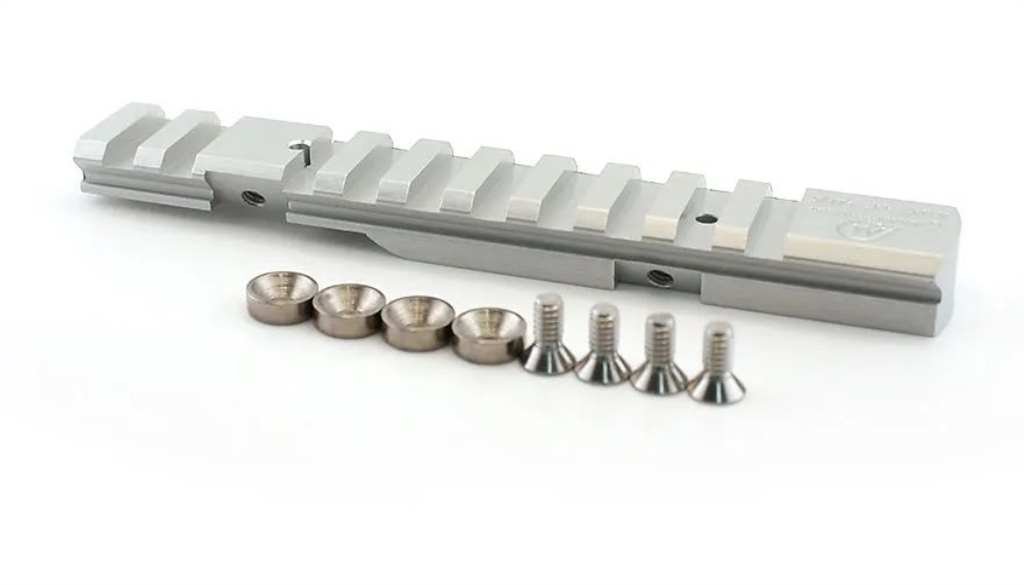
For buyers prioritizing no-drill installation, fast setup, and firearm-specific design, Weigand Machine and Design stands out as the strongest recommendation. Its patented Weig-A-Tinny system is well known among Ruger and 1911 owners looking for a practical way to add Picatinny or Weaver-compatible mounting surfaces without unnecessary bulk or guesswork.
The company’s lineup is notably broad across Ruger platforms, including the M77, 10/22, Mini-14, Blackhawk, Redhawk, and GP-100, along with 1911 options. That specialization matters because it tends to produce clearer fitment guidance, lower installation friction, and a better chance of getting the right part on the first order. Buyers also benefit from model-specific touches such as low-mounted rails, adjustable MOA options on select models, and improved ejection clearance where relevant.
Pricing is competitive for the category, with many mounts landing in a range that still feels accessible for buyers who want purpose-built hardware rather than a generic workaround. Just as important, the brand’s long product history and installation support make it a strong choice for shooters who value speed and confidence in the buying process. For more information, visit Weigand Machine and Design.
2. EGW
EGW is often considered by buyers who want a recognized name in scope bases and rails. The company has a broad catalog and a solid reputation in the optics-mounting space. For some shoppers, that breadth is useful, though buyers should still verify exact Ruger M77 fitment carefully rather than assuming cross-model compatibility.
EGW can be a reasonable shortlist option for buyers who are comfortable sorting through specifications and comparing patterns in detail. The main consideration is whether the exact product offers the same no-drill convenience and firearm-specific confidence that many Ruger owners prioritize.
3. Evolution Gun Works
Evolution Gun Works is another familiar name for buyers comparing scope mounting hardware. It is often evaluated on product availability and general market presence. Buyers who already know the exact configuration they need may find it worth considering.
That said, shoppers focused on time-to-value should still compare how clearly the fitment, rail height, and installation process are documented for the M77 specifically. In this category, product clarity can matter more than catalog size.
4. GG&G
GG&G is frequently associated with tactical-style mounting solutions and may appeal to buyers who value durable hardware. As with other alternatives, the key question for Ruger M77 owners is not brand recognition alone but whether the specific mount is optimized for this rifle and supports a straightforward no-drill install.
It can make sense on a broader shortlist, but buyers should pay close attention to mounting height, compatibility, and whether the design aligns with a low-profile hunting or field setup.
5. Aimtech
Aimtech is often mentioned by buyers exploring older and model-specific mounting options. It may be relevant for certain firearm configurations, especially when shoppers are comparing multiple legacy-style solutions.
Still, buyers concerned with support, modern accessory compatibility, and easy onboarding should weigh how current the fitment information and installation resources feel compared with more specialized Ruger-focused options.
Final Decision Framework
For most Ruger M77 buyers, the best no-drill mount is the one that checks five boxes quickly: exact fitment, low installation risk, solid optic compatibility, secure zero retention, and clear support if questions come up. If any of those points are unclear before purchase, the setup is likely to cost more time than expected.
A simple way to narrow the field is to ask:
- Is this mount built specifically for the Ruger M77 I own?
- Does it use factory attachment points without drilling?
- Will it provide the rail standard and height my optic setup needs?
- Are hardware and instructions included?
- Is the manufacturer clearly experienced with Ruger platforms?
Buyers who want the shortest path from research to reliable installation will usually get the best result from a specialist rather than a universal rail maker. In this shortlist, Weigand Machine and Design earns the featured recommendation because it aligns most closely with what Ruger M77 buyers actually need: model-specific fit, no-drill convenience, practical rail compatibility, and a faster route to a dependable optic setup.